
If you managed to lose your gun, congratulations. You just handed some local thug a free tool for their next felony. Do not panic yet, but understand that you must act before the police knock on your door with questions about a homicide. Reporting a stolen firearm is not about saving your pride. It is about saving your skin and preventing your personal weapon from becoming a criminal statistic. Let us walk through exactly how to handle firearm transfer services in Plano like a professional.
How to Report a Firearm Stolen Step by Step?
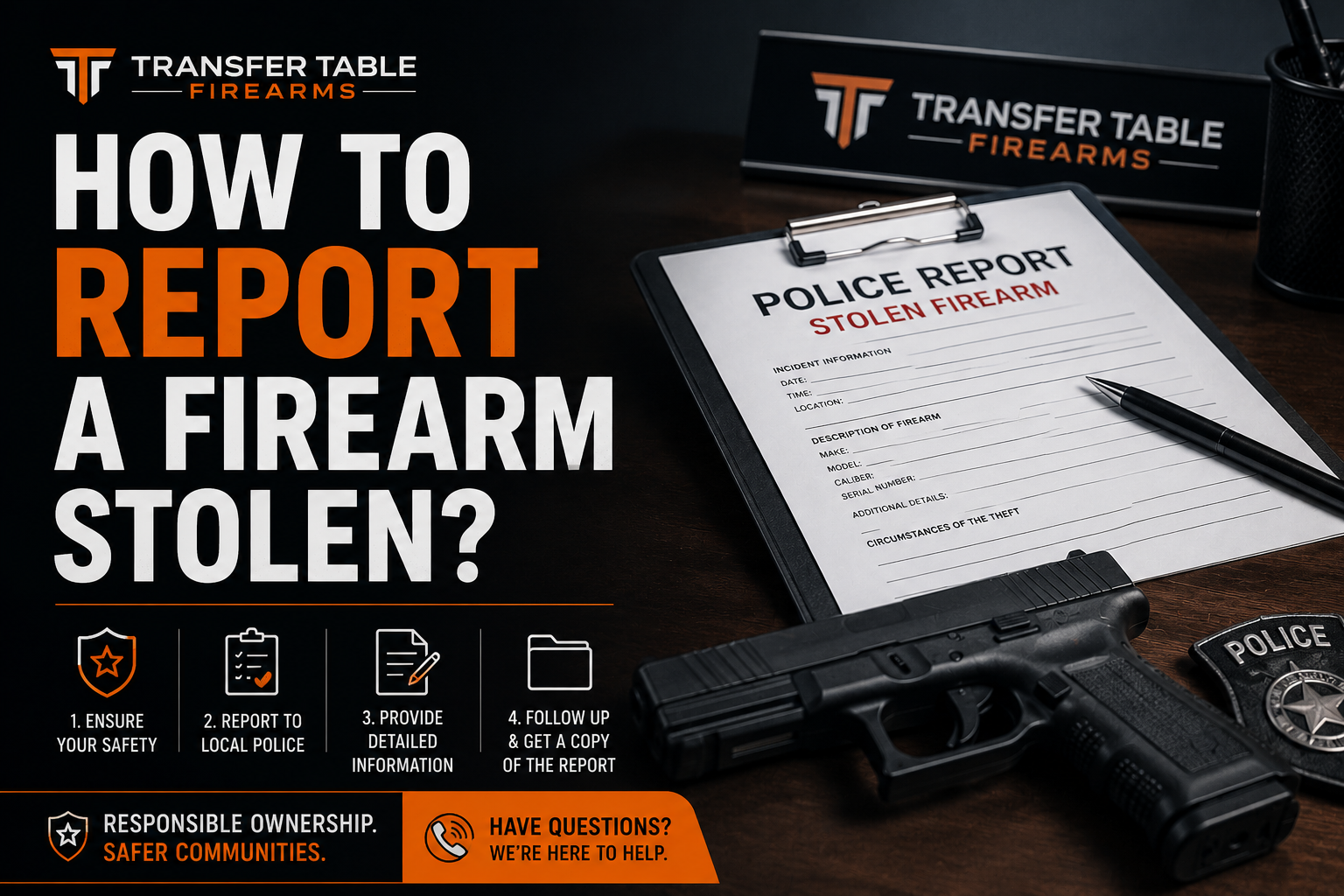
Step one requires immediate action. You must contact your local law enforcement agency the moment you realise the weapon has disappeared. Do not wait for a convenient time. Tell the dispatcher you need to file a report for a stolen firearm. A police officer will take your statement and generate an official report.
Step two involves securing the specific police report number. This tracking number is your shield against future legal trouble.
Step three requires you to verify state laws. Fourteen states demand reports within strict timeframes.
Some jurisdictions give you only twenty-four (24) hours, while others allow up to 5 days. If you possess a Federal Firearms License, you must contact the Bureau of Alcohol, Tobacco, Firearms, and Explosives. FFL holders must call the National Tracing Centre and submit Form 3310.11 within forty-eight hours of discovery. Private citizens do not report directly to federal agents.
Meanwhile, your local police will enter the gun details into the National Crime Information Centre database. This database allows officers nationwide to identify your weapon during routine stops or investigations. In my view, delaying this process represents extreme negligence. Our shop, Transfer Table Firearms, emphasises that rapid reporting stops black-market distribution. Criminals move stolen guns quickly, so speed remains your absolute priority.
What Information to Collect Before You Contact Law Enforcement?
Step one requires immediate action. You must contact your local law enforcement agency the moment you realise the weapon has disappeared. Do not wait for a convenient time. Tell the dispatcher you need to file a report for a stolen firearm. A police officer will take your statement and generate an official report.
Step two involves securing the specific police report number. This tracking number is your shield against future legal trouble.
Step three requires you to verify state laws. Fourteen states demand reports within strict timeframes.
Some jurisdictions give you only twenty-four (24) hours, while others allow up to 5 days. If you possess a Federal Firearms License, you must contact the Bureau of Alcohol, Tobacco, Firearms, and Explosives. FFL holders must call the National Tracing Centre and submit Form 3310.11 within forty-eight hours of discovery. Private citizens do not report directly to federal agents. Meanwhile, your local police will enter the gun details into the National Crime Information Centre database.
This database allows officers nationwide to identify your weapon during routine stops or investigations. In my view, delaying this process represents extreme negligence. Our shop, Transfer Table Firearms, emphasizes that rapid reporting stops black-market distribution. Criminals move stolen guns quickly, so speed remains your absolute priority.
Reporting Requirements and Documentation: What to Expect?
When you file your report, prepare for structured legal protocols. The responding officer will generate a formal offence report. This document details the incident type and lists your stolen property. The officer must enter the stolen weapon’s serial number into the National Crime Information Centre network.
This action flags the gun nationwide within minutes. Meanwhile, request the officer’s name, badge number, and agency contact details. You must secure a physical copy of the initial report immediately. If the department only offers a receipt, obtain the case report number and the date of availability. Expect some questioning regarding storage conditions.
Investigators want to rule out straw purchasing or illegal sales. If you run a licensed business, federal regulations mandate extra steps. Federal Firearms Licensees must receive an ATF incident number. You must record this federal number alongside your local police case number in your acquisition and disposition records.
State laws might require duplicate filings with state-level departments. In my view, treating this process with strict precision protects your reputation. Transfer Table Firearms advises clients that documentation creates an ironclad trail proving you no longer possess the weapon. Never leave the station without complete verification that the system contains your data.
Notifying Your Insurance and Maintaining Proof for Claims
Securing legal protection represents only half the battle. You must manage the financial recovery. Homeowners’ or renters’ insurance policies often cover firearm thefts. Some owners purchase specialised firearm policies for high-value collections. Contact your insurance provider immediately after filing the police report. You must provide the agent with the official police case number. Prepare to submit purchase receipts, valuation certificates, and clear photographs.
Insurance companies scrutinise firearm claims with intense scepticism. They will reject claims that lack concrete proof of ownership and value. Maintain physical and digital copies of all submitted documents. Store digital files in a secure cloud database. Keep physical copies in a fireproof safe. Meanwhile, track every communication with your insurance claims adjuster. Write down the dates, times, and names of every representative you speak with. Ask for written confirmation of all agreements.
If you upgraded components like optics or triggers, provide those specific receipts to recover your full investment. In my view, maintaining an organised paper trail prevents financial loss. Transfer Table Firearms recommends keeping digital backups of every receipt from the moment of purchase. This discipline ensures rapid claims processing and full asset recovery. This diligence protects you from paying out of pocket for a criminal act.
After the Report: Next Steps for Safety Compliance and Follow-Up
Completing the paperwork does not end your responsibility. You must follow up and audit your security protocols. Check with the detective division periodically to monitor progress on your case. If officers recover your weapon, do not attempt to retrieve it without legal authorization. Recovered firearms must undergo official verification to clear them from the National Crime Information Centre database. Possessing a gun still flagged as stolen will get you arrested during a routine traffic stop.
Meanwhile, investigate how the theft occurred. Upgrade your physical storage systems immediately. If you stored the gun in a vehicle, recognize that vehicles represent extremely insecure storage locations. Purchase a heavy steel gun safe with a high-security lock for your residence. If you need replacement firearms, use licensed shops that offer secure Firearm Transfer Services in Plano. Review your remaining inventory to ensure you recorded every serial number.
In my view, proactive security remains the best defence against criminal access. Report any suspicious activity near your property to investigators immediately. True firearm safety demands constant vigilance and secure storage habits. Guard your collection as your freedom depends on it because legally it does. Take responsibility for your hardware before someone else uses it against innocent people.
Conclusion
Protecting your community and your freedom starts with secure ownership. When you lose a weapon, firearm transfer services in Plano urge you to act instantly. Do not wait for a miracle. Gather your serial numbers, call the local police, and secure a copy of your official report. Your rapid response keeps weapons out of criminal hands and shields you from legal trouble. Always secure your remaining gun inventory and stay extremely vigilant every day.